


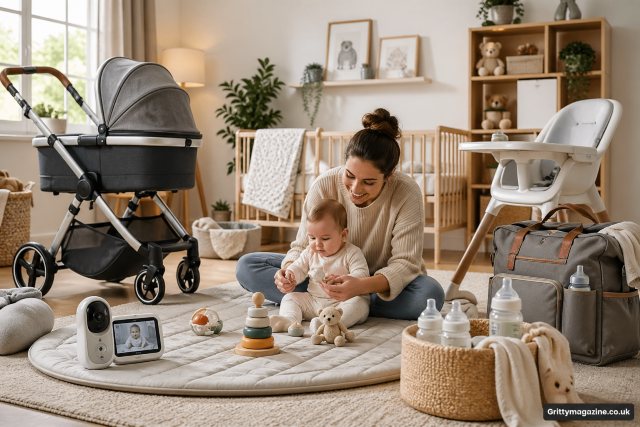
Choosing the right Essential Baby And Toddler Equipment Lumolog can make daily parenting feel safer, calmer, and more organized. From the first night at home to the busy toddler stage, families need baby gear that supports comfort, safety, feeding, travel, sleep, hygiene, and early development.
Modern parents are not only looking for cute baby products. They want smart, practical, long-lasting equipment that solves real problems. A crib should support safe sleep. A stroller should make travel easier. A high chair should be stable and simple to clean. A car seat should fit the child correctly and be used according to safety guidance.
That is where the idea of Lumolog-style baby equipment becomes useful. It focuses on smart selection, thoughtful organization, and family-friendly gear that grows with your child instead of creating clutter.
What Is Essential Baby And Toddler Equipment Lumolog?
Essential Baby And Toddler Equipment Lumolog refers to a smart, practical approach to choosing baby and toddler gear. It is not about buying every trending product. It is about selecting the equipment that genuinely helps parents care for their child safely and comfortably.
For new parents, the baby product market can feel overwhelming. There are dozens of versions of cribs, bassinets, strollers, monitors, carriers, bottles, bath tubs, changing stations, and toddler safety tools. The Lumolog approach helps families focus on what matters most: safety, usefulness, durability, comfort, and age-appropriate design.
The best baby and toddler equipment should support everyday routines. It should help with sleep, feeding, changing, bathing, traveling, playing, and keeping the home safe as the child grows.
Why Smart Baby Gear Matters for Modern Families
Baby gear is not just about convenience. It can directly affect a child’s safety and a parent’s peace of mind.
For example, sleep products should follow safe sleep recommendations. The American Academy of Pediatrics recommends placing babies on their backs for sleep and using a firm, flat sleep surface without soft bedding, pillows, bumpers, or loose blankets.
This means parents should avoid choosing sleep products only because they look soft or luxurious. A safe crib, bassinet, or play yard should meet current safety standards and create a clear, flat, firm sleeping space.
Travel gear matters too. The CDC advises keeping children rear-facing as long as possible, until they reach the height or weight limit of their car seat. This makes the car seat one of the most important items on any baby equipment checklist.
Smart baby gear helps reduce stress because it gives parents tools that work with daily life instead of against it.
Essential Sleep Equipment for Babies and Toddlers
Sleep is one of the first areas where parents need reliable equipment. A safe sleep setup should be simple, stable, and easy to maintain.
A crib, bassinet, or portable play yard is usually the foundation. For newborns, many parents prefer a bassinet because it keeps the baby close during the first months. As the baby grows, a full-size crib often becomes more practical.
The mattress should be firm and fit tightly inside the crib or bassinet. A fitted sheet is enough. According to CDC safe sleep guidance, babies should sleep on a firm, flat surface, and soft bedding such as blankets, pillows, bumper pads, and toys should be kept out of the sleep area.
For toddlers, a convertible crib can be useful because it may transition into a toddler bed. This can save money and help the child adjust gradually.
Image alt tag: Essential Baby And Toddler Equipment Lumolog safe crib setup with firm mattress and simple nursery design.
Essential Baby And Toddler Equipment Lumolog for Feeding
Feeding equipment changes as the child grows. Newborns may need bottles, breast pump accessories, burp cloths, sterilizing tools, and nursing pillows. Older babies need spoons, bowls, bibs, sippy cups, and a safe high chair.
WHO and UNICEF recommend exclusive breastfeeding for the first six months when possible, followed by continued breastfeeding with appropriate complementary foods. However, every family’s feeding journey is different. Some babies are breastfed, some are formula-fed, and some use a combination.
A practical feeding setup should be easy to clean. Bottles should be simple to assemble. Bibs should be washable. Bowls should be stable. A high chair should have a secure harness, strong base, and easy-to-clean surface.
The CPSC lists high chairs among durable infant or toddler products covered under safety standards. Parents should check product labels, follow assembly instructions, and register products when possible so they can receive recall notices.
A good feeding area also reduces mess. Keep wipes, bibs, burp cloths, and extra spoons nearby. This small organization habit can make meal times much smoother.
Car Seats: The Most Important Travel Essential
A car seat is one of the most important pieces of baby and toddler equipment. It should be chosen carefully, installed correctly, and used every time the child rides in a vehicle.
For infants, a rear-facing car seat is essential. The CDC recommends buckling children in a rear-facing car seat with a harness in the back seat until they reach the maximum height or weight limit allowed by the car seat manufacturer.
Parents should avoid buying used car seats unless they know the full history. A car seat that has been in a crash, has missing parts, is expired, or lacks instructions may not protect properly.
As the child grows, families usually move through stages: infant seat, convertible car seat, forward-facing seat, booster seat, and finally the regular seat belt when the child fits correctly.
The Lumolog mindset is simple: do not rush the next stage. Use the safest suitable option for the child’s age, size, and development.
Strollers, Carriers, and Everyday Mobility Gear
Parents need equipment that makes movement easier. A stroller is useful for walks, errands, appointments, and travel. A baby carrier can be helpful when parents need hands-free movement, especially during the early months.
The best stroller depends on lifestyle. City parents may prefer lightweight and compact strollers. Families who walk on rough paths may need larger wheels and stronger suspension. Parents with twins or siblings close in age may need a double stroller.
A baby carrier should support the baby’s body safely and feel comfortable for the adult. Adjustable straps, proper hip support, breathable fabric, and secure buckles are important features.
For toddlers, lightweight travel strollers are often more practical than bulky models. Toddlers may want to walk sometimes and ride sometimes, so portability matters.
Diapering and Changing Equipment
Diapering is a daily routine, so the right equipment can save time and reduce stress. A changing table or changing pad gives parents a dedicated place to change diapers safely.
The changing area should include diapers, wipes, diaper cream, clean clothes, and a small bin for disposal. Everything should be within arm’s reach so the parent never has to leave the baby unattended.
A portable changing mat is also useful for travel. It fits inside a diaper bag and helps parents manage changes in public spaces, cars, or while visiting family.
For toddlers, diapering equipment may shift toward potty training supplies. A toddler potty, step stool, training seat, and easy-clean underwear can support the transition.
Bathing and Hygiene Essentials
Bath time requires simple, safe equipment. A baby bathtub can help support newborns and infants before they are ready for a regular tub. Soft washcloths, mild baby cleanser, hooded towels, nail clippers, and a baby brush are also useful.
Parents should never leave a baby or toddler alone in the bath, even briefly. Safety matters more than convenience.
For toddlers, non-slip bath mats, faucet covers, and bath toy organizers can help make the bathroom safer and cleaner. Bath toys should be cleaned often to avoid mold buildup.
A good hygiene kit should include a thermometer, nasal aspirator, baby-safe nail trimmer, and basic grooming items. These small tools become very useful during colds, teething, and everyday care.
Nursery Organization and Storage Gear
A calm nursery is not created by decoration alone. Organization plays a big role.
Storage baskets, drawer dividers, closet organizers, and labeled bins can help parents keep clothes, diapers, blankets, toys, and feeding items in order. When supplies are easy to find, daily routines become faster.
The best nursery setup uses zones. One zone for sleep. One zone for changing. One zone for feeding. One zone for clothing and storage. This keeps the room practical instead of cluttered.
For toddlers, accessible storage becomes more important. Low shelves and soft bins allow children to learn simple cleanup habits.
Baby Monitors and Smart Safety Tools
Baby monitors are popular because they help parents keep an eye or ear on their child from another room. Audio monitors are simple and affordable. Video monitors offer visual reassurance. Smart monitors may include movement alerts, temperature readings, or app-based access.
Parents should choose monitors carefully and understand that they are not a replacement for safe sleep practices. A monitor can support awareness, but the baby still needs a safe sleep environment.
Other smart safety tools include room thermometers, outlet covers, cabinet locks, stair gates, corner guards, and door stoppers. As babies become mobile, home safety becomes more urgent.
The CPSC includes gates, enclosures, cribs, strollers, high chairs, and other child products under durable infant or toddler product categories, which shows how broad safety considerations are in baby equipment selection.
Play and Development Equipment
Play equipment should support learning, movement, and imagination. For babies, simple toys like soft rattles, textured balls, tummy time mats, and board books are valuable.
Tummy time helps babies strengthen muscles used for rolling, crawling, and sitting. A soft activity mat can make this routine more comfortable.
For toddlers, toys should encourage problem-solving, movement, language, and creativity. Building blocks, shape sorters, pretend-play sets, musical toys, and picture books are strong choices.
Avoid overcrowding the play area. Too many toys can overwhelm children. Rotating toys every few days can keep play fresh without buying more items.
Toddler Safety Equipment for the Home
Once babies start crawling and walking, the home changes quickly. Toddlers are curious, fast, and often unaware of danger.
Safety gates are important near stairs. Cabinet locks help keep cleaning products, medicines, and sharp objects out of reach. Outlet covers, furniture anchors, corner protectors, and door locks can reduce common risks.
Furniture anchoring is especially important because toddlers may climb shelves, dressers, or TV stands. Heavy furniture should be secured to the wall.
Parents should look at each room from a toddler’s height. This simple method helps spot dangling cords, small choking hazards, unstable furniture, and reachable drawers.
How to Choose Baby and Toddler Equipment Wisely
The best baby gear is not always the most expensive. Parents should focus on safety, quality, ease of cleaning, and long-term usefulness.
Before buying, ask whether the item solves a real problem. If it only looks attractive but does not improve daily life, it may not be necessary.
Check product dimensions, weight limits, safety labels, age recommendations, and cleaning instructions. Read the manual before use. Register products with the manufacturer when possible so recall updates are easier to receive.
Parents should also think about space. Small homes need compact, foldable, or multi-use gear. A convertible crib, travel-friendly stroller, and storage-friendly high chair can make a big difference.
Common Mistakes Parents Should Avoid
One common mistake is buying too much before the baby arrives. New parents often feel pressure to prepare everything, but many items are easier to choose after learning the baby’s habits.
Another mistake is choosing style over safety. A nursery may look beautiful, but safe sleep guidance should always come first.
Parents should also avoid ignoring weight and height limits. Baby swings, carriers, strollers, high chairs, and car seats all have limits for a reason.
Used products should be checked carefully. Cribs, car seats, and high chairs should meet current safety rules and should not have missing parts, damage, or recall issues.
Real-World Example: A Practical Lumolog Setup
Imagine a family preparing for their first baby in a small apartment. Instead of buying every product online influencers recommend, they choose a compact bassinet, a convertible crib, a rear-facing car seat, a lightweight stroller, a washable changing pad, a small bottle station, and a foldable baby bathtub.
As the baby grows, they add a high chair, safety gates, cabinet locks, a play mat, and toddler feeding tools. They avoid clutter by choosing items that serve more than one purpose.
This is the heart of Essential Baby And Toddler Equipment Lumolog. It is not about buying more. It is about buying smarter.
What Baby and Toddler Equipment Is Truly Essential?
Essential baby and toddler equipment includes a safe crib or bassinet, firm mattress, car seat, stroller, baby carrier, diapers, changing supplies, feeding tools, high chair, bath items, hygiene kit, baby monitor, storage organizers, developmental toys, and toddler safety gear. The best products are safe, age-appropriate, easy to clean, durable, and useful in daily family routines.
FAQs About Essential Baby And Toddler Equipment Lumolog
What is the most important baby equipment to buy first?
The most important items are a safe sleep space, a properly installed car seat, diapers, feeding supplies, clothing, and basic hygiene tools. These cover the baby’s first needs at home and during travel.
Is expensive baby gear always better?
No. Expensive gear is not always safer or more useful. Parents should check safety standards, product reviews, durability, size limits, and ease of use before focusing on price.
What toddler equipment becomes important after the first year?
After the first year, families often need a high chair or booster seat, toddler bed or crib conversion, safety gates, cabinet locks, training cups, potty training tools, and development-friendly toys.
Should parents buy second-hand baby equipment?
Some second-hand items can be useful, but parents should be careful with cribs, car seats, high chairs, and strollers. Check for recalls, missing parts, damage, expiration dates, and current safety guidance before use.
How can parents avoid buying unnecessary baby products?
Parents can avoid unnecessary purchases by focusing on daily routines: sleep, feeding, diapering, bathing, travel, safety, and play. If a product does not support one of these areas, it may not be essential.
Conclusion
Essential Baby And Toddler Equipment Lumolog is about choosing smart, safe, and practical gear that truly supports family life. Parents do not need every trendy product. They need equipment that helps their child sleep safely, travel securely, eat comfortably, stay clean, play happily, and explore the home with less risk.
The best baby and toddler gear grows with the child, saves space, reduces stress, and supports everyday routines. From a safe crib and rear-facing car seat to feeding tools, bath supplies, toddler safety equipment, and developmental toys, every item should have a clear purpose.
For modern families, smart parenting begins with smart preparation. When parents choose Essential Baby And Toddler Equipment Lumolog with safety, comfort, and practicality in mind, they create a home that feels more organized, confident, and ready for every stage of childhood.
